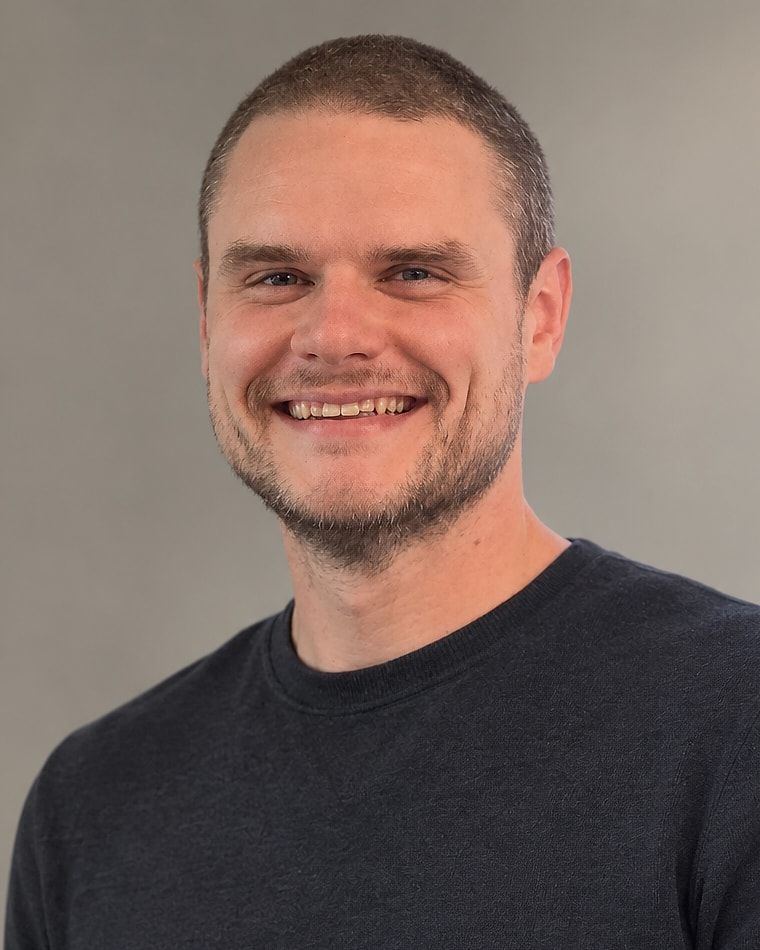
Evan Hallam
Founder, Westlake Systems · LinkedIn
I've spent 19 years building electronic products, from first sketch to production line.
I came up hands-on: firmware first, then schematics, board layout, prototypes, bring-up and test. Over time the work grew into owning whole subsystems, then running whole programs: scoping and estimating the work, setting the architecture, leading the team, and signing off the firmware and manufacturing releases. I still enjoy the bench, and I'm as comfortable in a schematic as I am in a program review.
The work I'm best at lives in the seams between disciplines. Products rarely fail because one piece was designed badly. They fail because the electrical, firmware, RF, and mechanical pieces were each designed well, in isolation. Catching that early is most of the job.
Some of the seams are ones nobody drew. I have more than once traced a product that worked on the bench and failed outside, only in direct sunlight, to a semiconductor junction in a small package picking up light through the enclosure. It is the kind of cause nothing in the schematic points to, and the junior engineers usually think I'm wrong until a piece of cardboard over the board makes the fault disappear. The full story is an article.
Kinds of work
Products taken to production
Dozens of them, from first sketch through compliance testing, production test and contract manufacturing. A recent example is a multi-product system with electrical, firmware, software and mechanical work, taken through FCC and CE testing and into manufacturing.
Imaging and precision timing
High-speed cameras for sports and precision timing, across several product generations. I designed boards and front ends, then led the design teams.
Hard environments
Electronics for underground mining and industrial sites: communications, proximity detection, lighting upgrades, and test rigs for regulatory evaluation. One job was reverse-engineering a legacy radio design with no surviving design files, to improve diagnostics and yield.
Studies and second opinions
Not every project ends in a board: feasibility studies, field range testing, and sensor and optics trade studies that answer "will this work?" before anyone commits to building.
Radio and UWB
Ultra-wideband has been a specialty for more than a decade, alongside sub-GHz and Bluetooth LE. I've reviewed and helped engineer radio designs for about a dozen companies, including angle-of-arrival antenna arrays, multi-receiver systems, and amplifier chains.
Lately much of my work has been with founders and small teams: reviewing designs, pressure-testing architectures, and helping make the expensive decisions before they get expensive. Often that means serving as a fractional CTO: setting technical direction, running the engineering effort, and helping leadership see the realities and limits before they commit.
When a project needs more than one engineer, I bring in independent specialists I know and trust, from software and mechanical design to compliance and regulatory work. Clients get the right expertise without building a team to get it. How that works.
If you want to see how I think, these articles are a good place to start.