
What AI PCB review tools miss
AI review finds real problems in schematics and layouts, and it misses in predictable ways. It reads pin names off the schematic symbol instead of the datasheet, takes typical values where the worst case decides, reports checks as done that never ran, misses faults that sit between two blocks reviewed separately, and suggests fixes that can’t be ordered. A few questions show how far to trust a report: does every finding cite a datasheet page for your exact part, does every “checked” say what was looked at, and were the margins worked at the worst case?
These patterns come from running AI review on public sample boards, not from comparing products, so they describe how AI review tends to work rather than any one tool. It’s worth running. It catches things people miss, and it’s fast. The useful skill is knowing where to look after it.
Reading the wrong source
A review is only as good as what it reads. A common slip is trusting the design’s own schematic symbol: the review reads pin names off the symbol and never opens the pinout table. On one sample board a sensor’s symbol left out its no-connect pins, and a review working from the symbol saw nothing wrong. Only a row-by-row comparison with the datasheet’s pin table showed the gap.
Close behind is the wrong variant. Part numbers carry suffixes for voltage, package and grade, and a family datasheet gets read for a sibling part, so a limit is quoted for a different rating than the part on your BOM. And sometimes nothing is read at all: a model “knows” a figure and states it as fact. A second model is no check on that, because models often share the same wrong memory. A number without a page or table behind it is unverified, however confident it sounds.
Typical values where the worst case decides
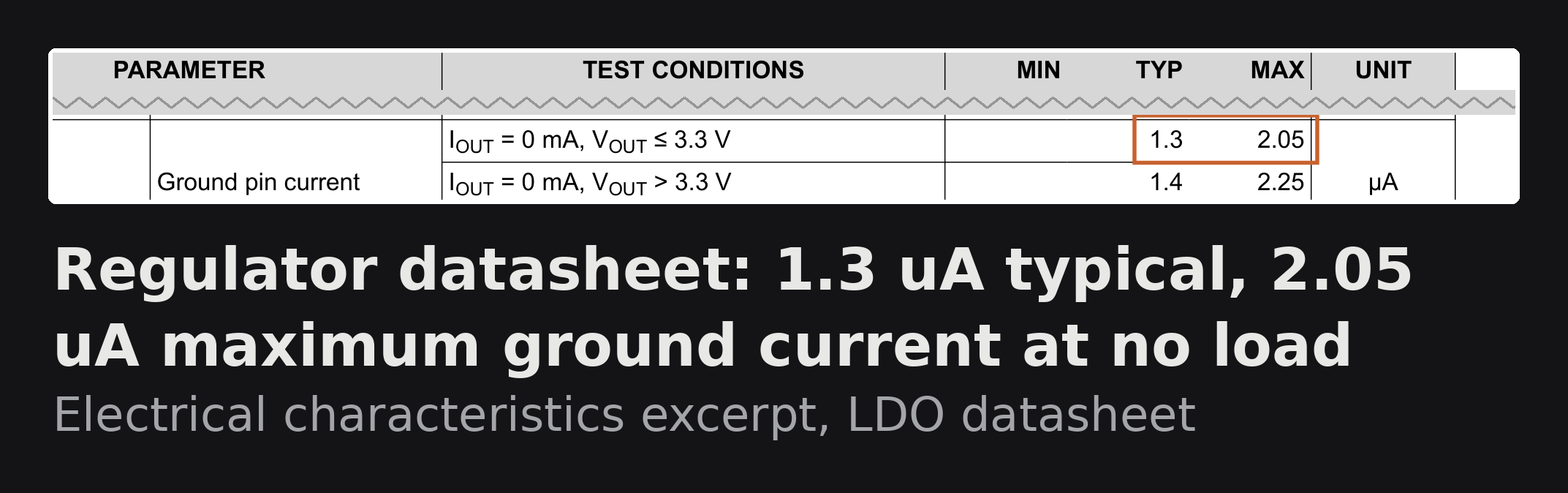
Datasheets give minimum, typical and maximum, and the typical column is the easy one to grab. On a battery-powered sample board, a regulator cleared the processor’s minimum supply at its typical dropout. At maximum dropout, with a sagging cell and peak current, the rail fell well below it. A margin should be worked at the worst case, with the calculation shown and the column named. If a number doesn’t say which column it came from, ask.
Checks that weren’t done
A long review gets split into pieces, and the pieces that don’t get finished tend to share one catch-all reason. One layout review marked a long list of checks “not examined, no fab files”, though the board file was in hand and answered most of them. The worse version is a check reported as passed when it never ran. In a summary, “no issues found” and “not checked” look the same unless the report says what was looked at and which file answered it.
What sits between the blocks
Reviewing a board block by block keeps each piece manageable, and it loses the joins. A signal between two blocks can look fine from both sides. The charger status pin in An AI tool designed your board. What to check before you order it is that kind of fault: a pin pulled up to USB voltage, wired to a 3.3 V input, on two sheets that each looked right. Whole-board checks drop out the same way, such as ESD protection at every connector.
Then there’s what the product does, as opposed to what its parts are. A review can compare every part with its datasheet and never walk through power-up, a low battery, charging with the switch off, a hot-plug or a brief cut-out. On a small battery-powered motor board, the low-battery cutoff sat inside the voltage sag under full load, so it would shut the motors off mid-run, and then re-arm.
Findings and fixes that don’t hold up
A finding can name a real fault and get the details wrong: the wrong reference designator, the wrong value, or a correction that fixed the text and left the old numbers in the evidence. If the first few findings have wrong details, the rest need checking too. The opposite happens as well, a real fault waved through as an intended design choice. And a suggested fix can fail on contact, such as a replacement part that only comes in another package or voltage grade.
What to ask of any AI review report
- Does each finding cite a datasheet page or table row, for the exact ordering code on your BOM?
- Does each “checked” say what was looked at and which file answered it, and does each “not checked” name the missing input?
- Are the margins worked at the worst case, with the calculation shown?
- Do the references, pins and values in three of the findings match your schematic?
- Were the joins checked (connectors, nets between supply domains, firmware against the board), and which operating states were walked through?
- Can each suggested fix actually be ordered, in your package, footprint and voltage grade?
Where an engineer fits
I treat an AI review report like a first pass from a sharp new engineer: worth reading, and worth checking line by line. What it can’t supply is the judgment of someone who has taken boards through bring-up and production: which findings matter, what the report didn’t say, and which of the product’s states nobody walked through. Designing hardware with AI covers the wider practices, and the example findings show what a review that cites its evidence looks like.
If you have an AI review report and want a second opinion on what it missed, get in touch.